
Visual Storytelling in 2000s Rom-Coms: How Movie Posters Captured a Feeling
By Zoe Kasinskas
Romantic comedies of the early 2000s didn’t just sell movie tickets. They sold a feeling. Through color, posture, wardrobe, typography, and other subtle visual cues, each movie poster told its own version of love, whether it be funny, flawed, or inevitable fate. As Elif Ayiter reminds us in The History of Visual Communication, typography and imagery are “the visual manifestation of the spoken word.” Even the smallest details, like a character’s expressions, a burst of color, or even the space between two actors, communicates emotion and narrative. These movie poster designs tell a story even before the film begins, hinting at character, tone, and the cultural values of the decade.
Confidence in Color
Legally Blonde (2001)
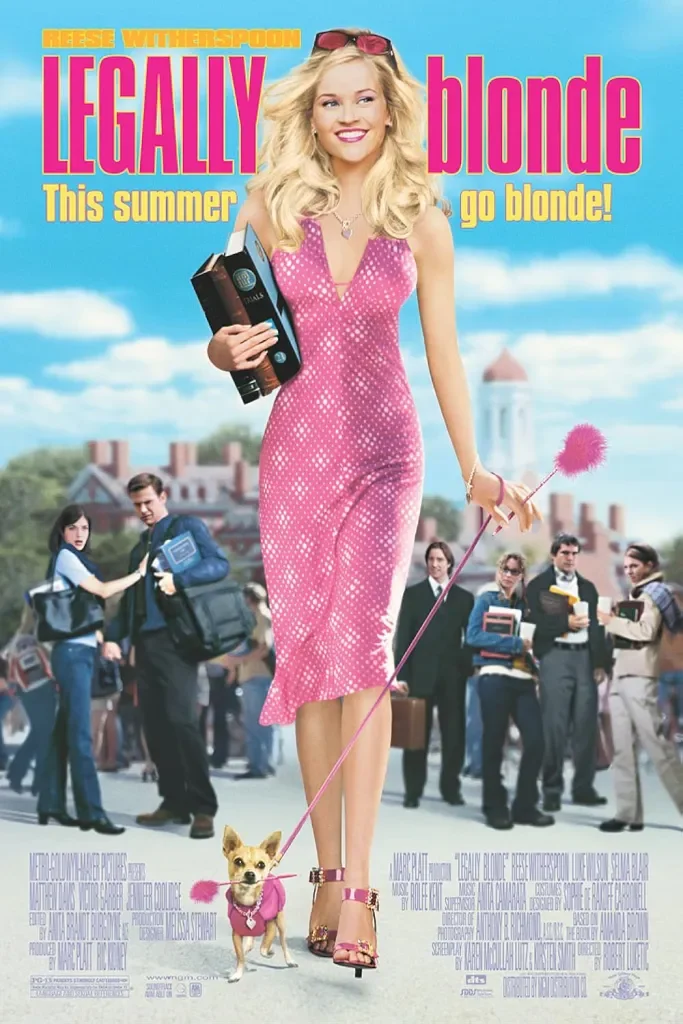
Image source: IMDb
Reese Witherspoon’s Elle Woods struts across Harvard’s campus in a pink dress and heels, and of course with her dog Bruiser. Behind her, classmates stare in disbelief, symbolizing underestimation. The use of bright pink communicates confidence, individuality, and unapologetic femininity, qualities that define the character and the story. The playful typography echoes Elle’s charm, polished but bold. The combination of these elements creates a visual statement about challenging assumptions and rewriting stereotypes.
Caught Between Two Worlds
Sweet Home Alabama (2002)
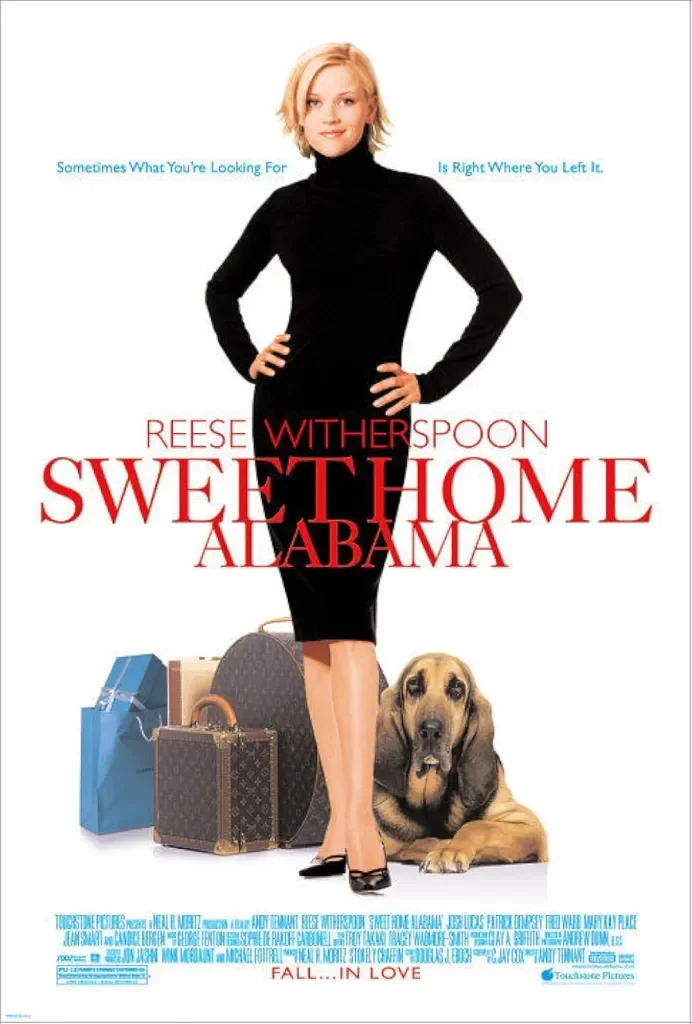
Image source: IMDb
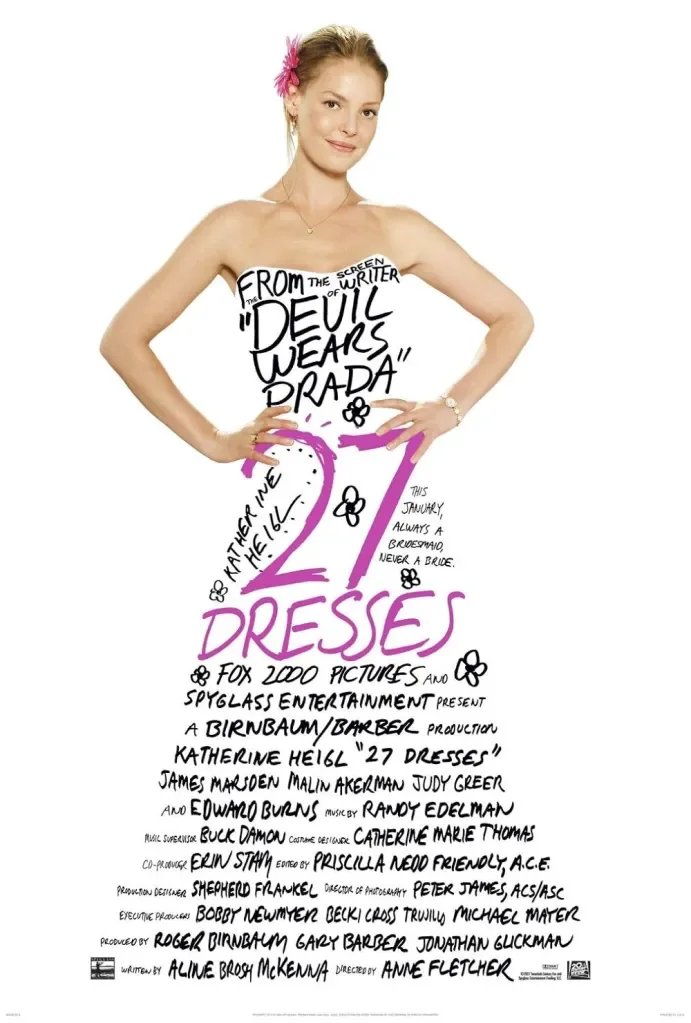
Image source: IMDb
In this poster, Reese Witherspoon stands poised in a sleek black dress against a clean white background. Luggage is scattered at her feet, and her loyal dog sits beside her. Each detail reflects duality. Her city-chic outfit represents her new life in New York, while the baggage at her feet symbolizes the emotional “luggage” waiting back home in Alabama. She’s caught between two worlds, the independence she’s built and the small-town roots she can’t quite leave behind. The minimalist design amplifies this tension, showing that sometimes what’s unsaid or unseen tells the biggest story.
The Body Language of Chemistry
How to Lose a Guy in 10 Days (2003)

Image source: IMDb
Whimsy and Reinvention
13 Going on 30 (2004)
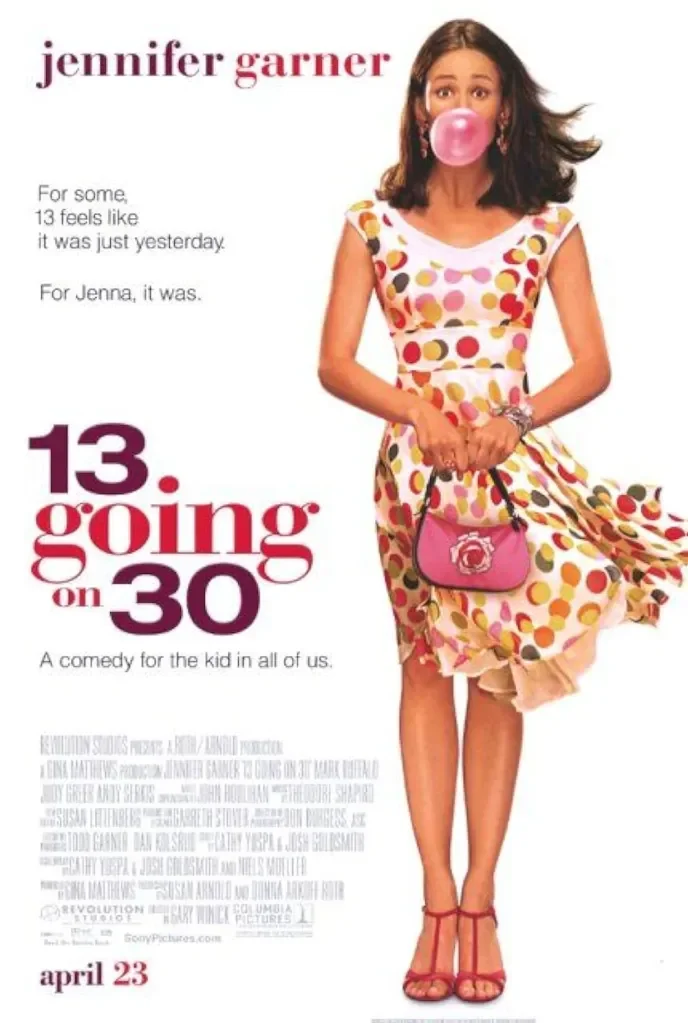
Image source: IMDb
Selflessness and Perfectionism
27 Dresses (2008)
Power and Playfulness
The Proposal (2009)
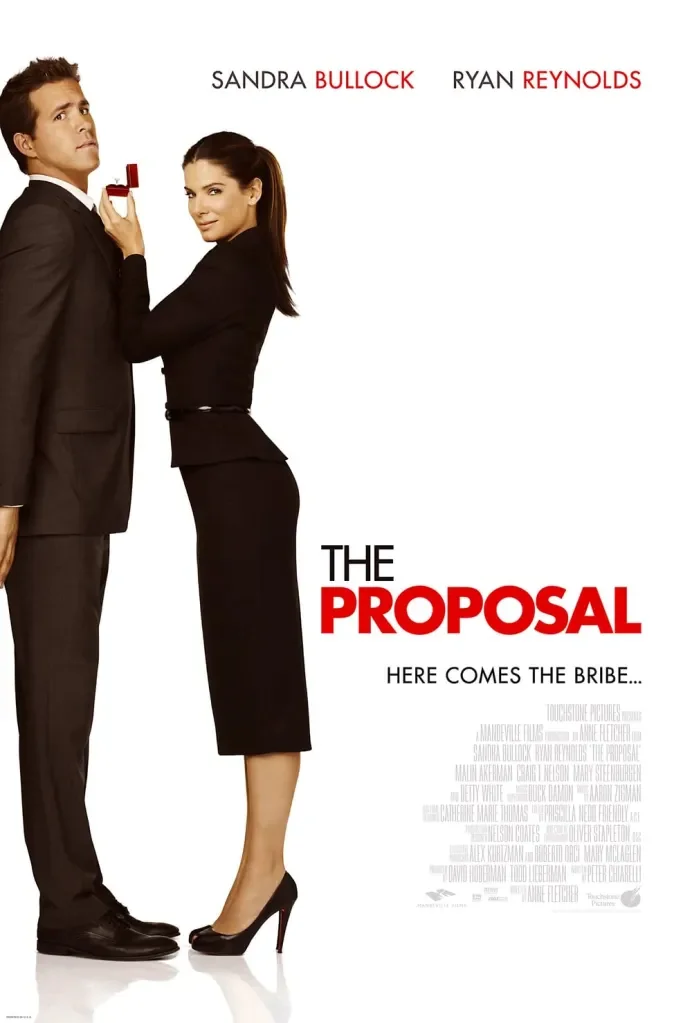
Image source: IMDb
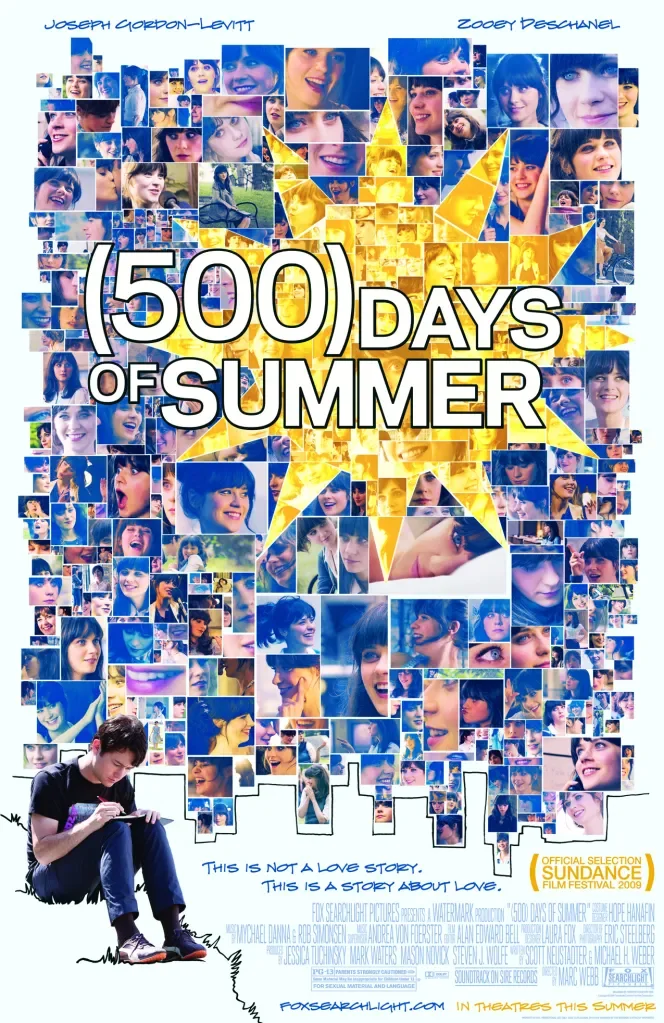
Image source: IMDb
Kate Hudson leans effortlessly against Matthew McConaughey, both standing back to back. Their expressions, equal parts pride and amusement, reveal the film’s premise before we ever read the tagline (“One of them is lying. So is the other.”). The golden tones add warmth, suggesting that even with all the rivalry, this will end in love. In “The Four Principles of Visual Storytelling,” Mike Montalto discusses the principle of authenticity, which feels evident here. The poster captures a genuine emotional tension that audiences instantly recognize.
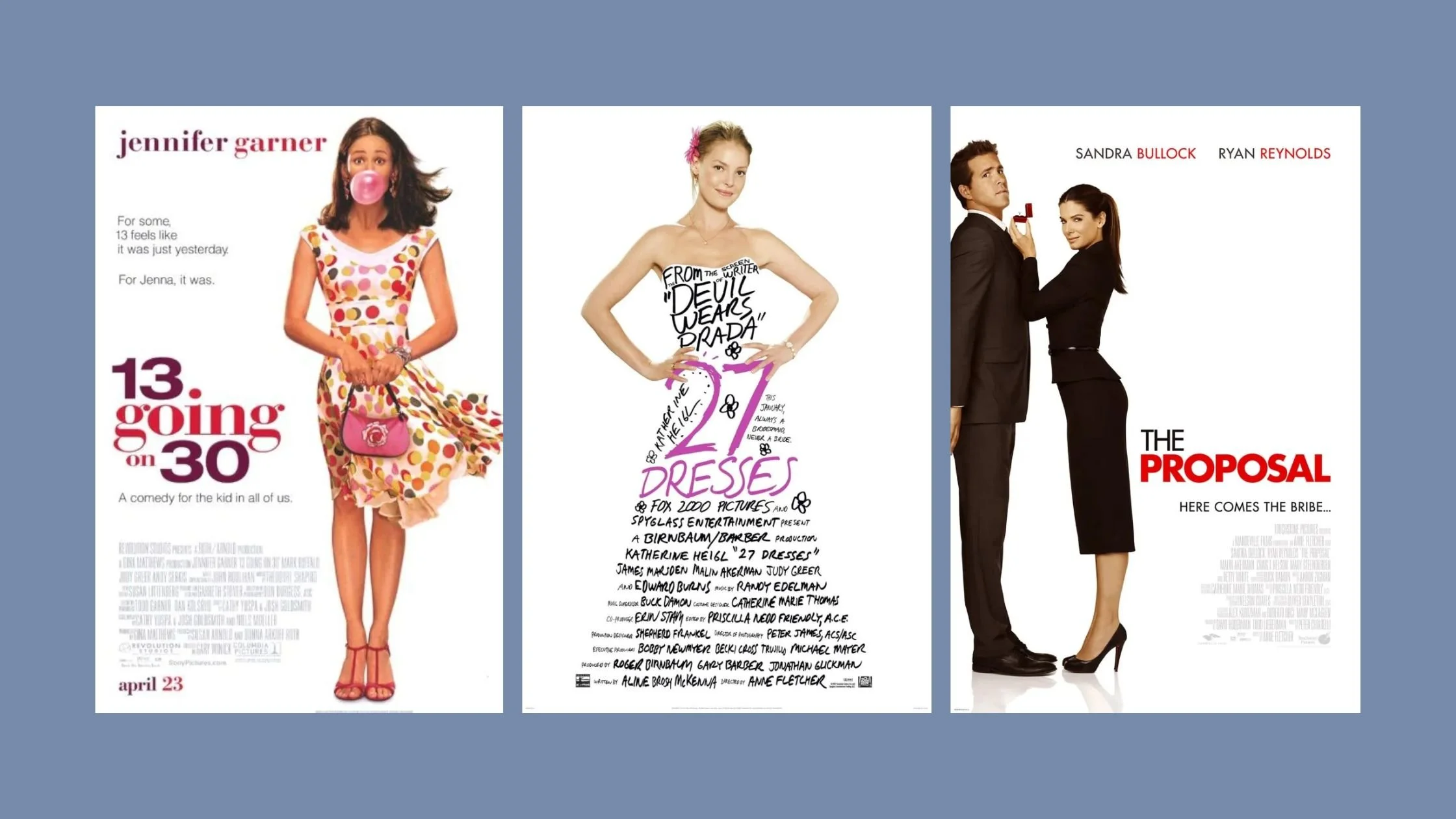
Jennifer Garner stands in a polka-dot dress, mid-bubblegum pop, with her hair caught in the wind. The white background and pink accents give the poster a light, youthful energy. The bubblegum detail, innocent and carefree, contrasts with the confident stance of adulthood, perfectly reflecting the movie’s theme of growing up too fast and rediscovering childlike joy. Rather than signaling transformation through movement, the poster uses contrast to show the balance between maturity and playfulness. It’s a visual reminder that even as we age, parts of our younger selves remain.
Katherine Heigl stands front and center, wearing a dress made up of the movie’s title and credits. It’s clever, minimal, and symbolic as the character is literally “wearing” her story. Her stance, confident but slightly weary, communicates the tension between being the reliable friend and finding her own happiness. The clean white background focuses all attention on her expression and body language. This design embodies Montalto’s principle of relevance, appealing to viewers who see themselves in her balance of chaos, care, and self-awareness.
Sandra Bullock and Ryan Reynolds stand in sharp contrast against a white background. She holds a ring box, pinning him against the wall with an expression that’s both confident and teasing. The composition reverses traditional romantic roles, where the power belongs to her. The details of posture, eye contact, and space between them tell us everything about the humor and tension of the story. It’s a perfect example of how body language can show more than any tagline could tell.
Memory in a Scrapbook Mosaic
(500) Days of Summer (2009)
Joseph Gordon-Levitt sits in the corner of the frame, small and reflective, while Zooey Deschanel’s character fills the rest of the poster in a collage of memories. The yellow sun that surrounds the title radiates warmth and nostalgia, mirroring how love often looks in hindsight. In “Visual Storytelling: 10 Stunning Examples to Inspire You,” author Erica Santiago writes, visual storytelling builds “authentic, emotional connection” between a brand and its audience, and here, between a story and its viewer. The fragmented design reflects how memory works: imperfect, beautiful, and deeply human.
The Details That Define a Decade
These posters helped define an iconic era of romantic storytelling. Through color, type, and composition, they told audiences what to feel before a single scene played out. They reminded us that visual storytelling doesn’t need to be too crazy, and that it’s truly about connecting with the audience. Every detail invites us into a story we think we already know but still want to experience again.
10/26/25